
Online Child Dyslexia Screening: Your Comprehensive Guide
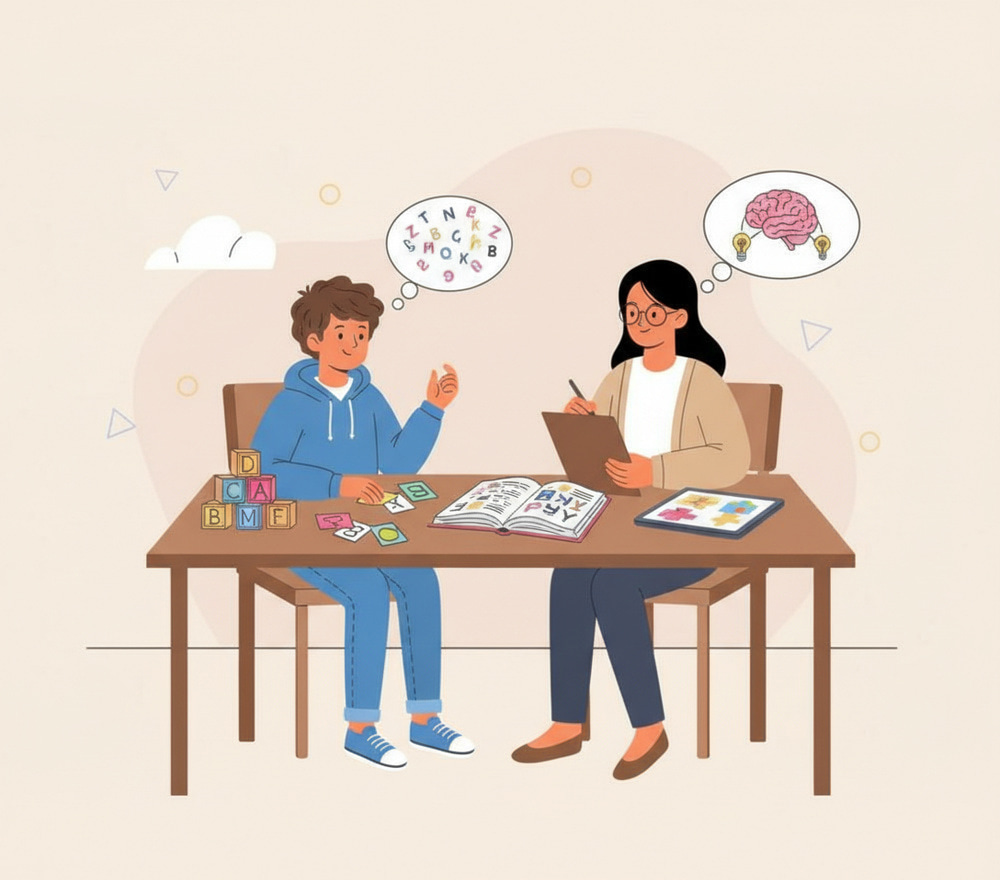
Check for Dyslexia Symptoms Online
Get StartedUnderstanding Dyslexia in Childhood: Why Early Clues Matter
Parents and educators often sense something is “off” long before a formal diagnosis arrives. Perhaps a bright child avoids reading aloud, guesses at words, or confuses letter sequences even after careful instruction. These signals can be subtle, and they frequently overlap with attention, anxiety, or vision issues, which makes clarity essential. Early insight empowers families to tailor support, reduce frustration, and preserve a child’s self-belief while the brain’s reading network is still highly plastic and responsive to targeted practice.
Many caregivers begin with a simple digital screener to gather preliminary information before seeking professional evaluation. Families appreciate that an online dyslexia test can provide an accessible perspective on common risk indicators without replacing a clinician’s comprehensive assessment. The purpose at this stage is not to label, but to illuminate patterns such as phonological awareness challenges, rapid naming difficulties, and working-memory strains that often underlie reading struggles.
Because dyslexia exists along a spectrum, screening is best viewed as the starting line, not the finish. A thoughtful roadmap typically includes observing real reading behaviors at home, coordinating with teachers to review progress-monitoring data, and acting quickly on evidence-based interventions. Timely action can prevent entrenched coping behaviors, strengthen decoding accuracy, and build fluency that ultimately unlocks comprehension.
- Spot early warning signs without stigma.
- Use preliminary data to guide targeted practice.
- Preserve motivation by adapting instruction swiftly.
How Digital Screeners Work and What They Measure
Web-based screeners rely on brief tasks that map to the cognitive foundations of skilled reading. Typical activities probe letter-sound correspondence, phoneme manipulation, automatic word recognition, and rapid naming of letters or symbols. Some tools also explore short-term auditory memory and processing speed, both of which can influence how quickly a child connects print to sound. The output is usually a risk profile, not a diagnosis, indicating whether additional evaluation is advised.
Educators often look for efficiency as much as accuracy when selecting a screening tool. A practical option is an online dyslexia screener that balances brevity with sensitivity, so children aren’t overwhelmed while still gathering useful signals. Results can inform instructional next steps, like focusing on segmenting and blending, increasing decodable text exposure, or incorporating cumulative review to foster automaticity.
Implementation quality matters as much as tool design. Schools may schedule universal checkpoints, while families might complete online dyslexia screening at home with a quiet environment and clear instructions. Short, engaging tasks help younger learners stay focused, and immediate feedback can motivate participation. However, any elevated risk should be followed by a conversation with a professional who can conduct a full, multi-faceted evaluation.
- Tasks reflect core reading subskills.
- Risk profiles guide, but do not diagnose.
- Follow-up assessment confirms findings.
Benefits for Families and Educators: Speed, Clarity, and Action
Timely insight can lower stress, streamline decisions, and reduce long waits for testing. When children receive targeted support early, they often make faster gains in decoding and spelling, which contributes to stronger comprehension and writing skills over time. Free and low-friction tools are especially helpful for families exploring concerns between teacher conferences or while awaiting specialist appointments.
Many caregivers appreciate that a free online dyslexia test can highlight risk patterns and spark constructive discussions with educators. When both home and school review objective indicators, it becomes easier to align instruction, monitor growth, and avoid the “wait to fail” spiral. A proactive team can iterate quickly: intensify phonics practice, scaffold fluency routines, and layer vocabulary work to support meaning-making.
Equity also improves when households can access preliminary screening without cost. For some, a dyslexia free online test reduces barriers and builds the case for professional referral. Early, data-informed supports help children maintain confidence, while families gain a clearer sense of what to ask for, from structured literacy instruction to progress tracking that verifies what’s working.
- Lower barriers to early identification.
- Coordinate interventions across home and school.
- Use objective indicators to personalize instruction.
Quick Comparison of Screening Approaches and When to Use Them
Choosing the right path depends on goals, timing, and resources. Universal screeners catch patterns in whole classrooms, while parent-led questionnaires offer observations across contexts. Short digital tasks provide efficiency, but deeper psychoeducational evaluations remain the gold standard for diagnosis. Placing these options on a continuum helps families decide what comes now, and what comes next.
Some families start with a dyslexia online test to quickly gather directional evidence, then proceed to a school-based team meeting for structured literacy planning. Others might seek a private evaluation immediately when a history of reading difficulty exists within the family. The key is to keep momentum, track outcomes, and escalate support as needed.
| Approach | Primary Use | Time | Output |
|---|---|---|---|
| Brief Digital Screener | Initial risk check | 10–20 minutes | Risk indicators |
| Teacher Checklist | Classroom observations | 15–30 minutes | Behavioral profile |
| School Team Review | Instructional planning | 1–2 meetings | Intervention plan |
| Comprehensive Evaluation | Diagnostic clarity | Several hours | Formal diagnosis |
Parents who need immediate, no-cost input often try a free online dyslexia screening test to decide whether to request further assessment. Educators can layer this with universal screening windows and curriculum-based measures, ensuring that students with emerging needs receive structured literacy supports without delay.
Step-by-Step: Preparing Your Child and Using a Screener Effectively
Good preparation can improve the quality of results and your child’s experience. Start by choosing a quiet space, silencing notifications, and ensuring a comfortable chair and device. Tell your child that this is not a graded test but a set of short activities to understand how their brain learns to read. Offer a glass of water, adjust screen brightness, and do a quick practice of following on-screen directions to reduce anxiety.
When you begin, remind your child that it’s okay not to know every answer, and that honest effort helps adults plan better support. Families who want a private at-home start sometimes choose a dyslexia self test online because it feels low-pressure and quick. Encourage breaks if attention dips, and consider using headphones to minimize distractions during auditory tasks.
After finishing, take a moment to discuss how it felt and note any items that seemed confusing or too easy. If the screener suggests elevated risk, consider sharing the results with your child’s teacher and requesting data on current reading progress. Some parents then try an online test dyslexia alternative from a different provider to triangulate signals, while others proceed directly to a school team or specialist for a full evaluation.
- Set clear expectations to reduce stress.
- Use a distraction-free environment and headphones.
- Debrief and plan next steps based on results.
Understanding Results, Next Steps, and Common Limitations
Screening outputs typically fall into bands such as “low,” “moderate,” or “elevated” risk. These categories reflect statistical likelihoods that reading challenges are present, not definitive labels. Interpreting results should always consider classroom data, instructional history, and any co-occurring factors like attention or language differences. When in doubt, escalate to a comprehensive evaluation for a full diagnostic picture.
Because no tool is perfect, families should treat one snapshot as part of a broader story. Educators often combine curriculum-based measures with periodic online testing dyslexia to see whether targeted instruction is moving the needle. Progress in decoding accuracy, reading rate, and spelling generalization over several weeks is usually a reliable indicator that interventions are taking hold.
Access matters as much as precision for many households. Some families look for an online dyslexia test free option to remove cost barriers while gathering enough evidence to justify formal testing. If risk flags persist, ask for structured literacy approaches grounded in explicit, systematic phonics, daily fluency practice, and cumulative review, then monitor gains using consistent progress checks.
- Treat results as guidance, not a diagnosis.
- Cross-check with classroom data and growth trends.
- Request evidence-based instruction and monitor progress.
FAQ: Free Online Dyslexia Test for Children
How reliable are web-based screeners for young readers?
Digital screeners can be surprisingly informative when they target core reading subskills and provide clear risk indicators, yet they do not replace a comprehensive evaluation by a qualified professional. Families should view the output as directional and combine it with teacher input, curriculum-based measures, and observed reading behaviors over time.
What age is appropriate for an initial check?
Early elementary years are an excellent time for initial screening because foundational phonological skills are developing rapidly. Younger children can still participate if the tool is designed for their age, but interpretation should be cautious and followed by ongoing progress monitoring to see whether instruction resolves emerging difficulties.
Can an online screener diagnose dyslexia?
Only a full psychoeducational assessment can provide a formal diagnosis, which includes standardized testing, history, and clinical judgment. A screener is intended to flag risk so that families can request deeper evaluation, secure targeted instruction, and begin tracking response to intervention with objective measures.
What should I do after a risk flag?
Share the results with your child’s teacher, ask about current reading data, and request structured literacy supports if gaps are evident. If concerns remain, consider booking a comprehensive evaluation while continuing to monitor decoding, fluency, and spelling gains through regular progress checks.
Are there options that won’t strain my budget?
Families seeking accessible entry points often turn to a free online dyslexia test for children resource to collect preliminary evidence before investing in a full evaluation. This approach can jump-start conversations with schools, help tailor early interventions, and ensure that support begins while you pursue a more comprehensive assessment if needed.